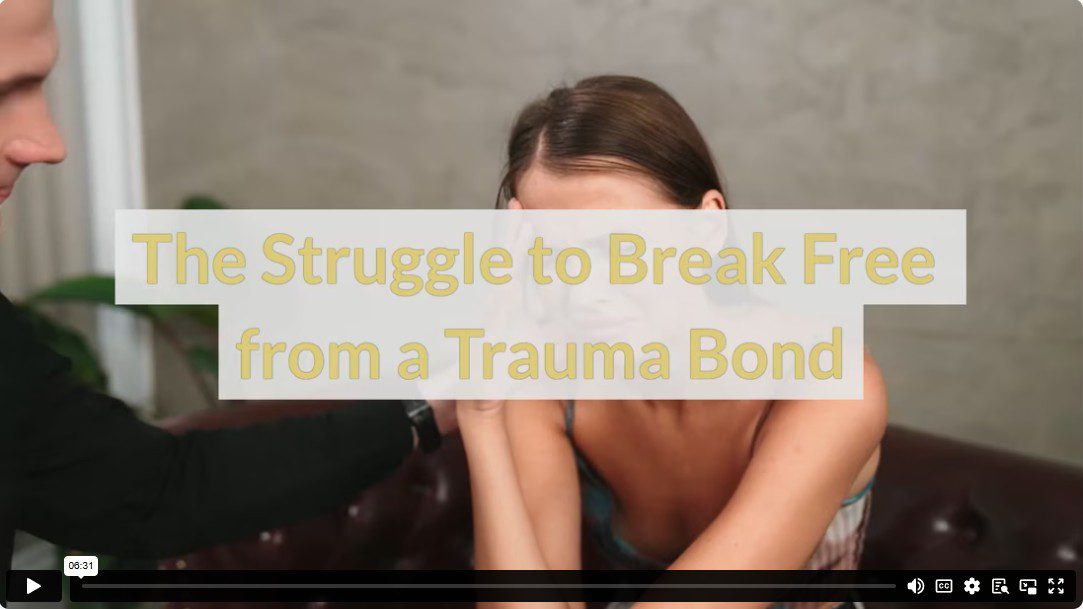
You feel stuck in a relationship that drains your energy and erodes your confidence. And yet, despite the pain it causes, you keep returning. You rationalize, you forgive, and you downplay. And even when you walk away, something powerful pulls you back in. That internal push-and-pull has a name: trauma bonding. And it is not your fault.
Trauma bonding develops when emotional attachment forms within a cycle of abuse, manipulation, and intermittent reinforcement. If you’re caught in this cycle, it’s not because you’re weak. It’s because your brain chemistry has been conditioned into a pattern that overrides logic. Recognizing this bond is the first step toward breaking it and reclaiming your power.

What Is Trauma Bonding?
Trauma bonding is the powerful emotional attachment that forms with someone who causes you harm. It commonly develops in relationships marred by narcissistic abuse, especially when the narcissist peppers periods of cruelty with moments of affection and remorse. That inconsistency is exactly what strengthens the bond.
Your brain becomes conditioned to link stress with connection. When the abuser withdraws affection or imposes punishment, anxiety sets in and drives you to restore equilibrium. Then, when the abuser cycles back to kindness, your nervous system floods with relief. This cycle of distress and reward creates a chemical dependency in the brain. Over time, the pattern becomes addictive.
Like a gambler waiting for the next win, you stay engaged, convinced the next turn will be different. But the longer you remain, the harder it becomes to acknowledge the truth: this is not love, and it is not your responsibility to fix the person causing the harm.
Signs You’re Experiencing a Trauma Bond
Trauma bonding isn’t always obvious, especially if you’ve been conditioned to normalize the chaos or blame yourself. But there are consistent indicators that a relationship is rooted in emotional manipulation rather than mutual respect.
You might:
- Rationalize or downplay abusive behavior
- Feel loyalty toward someone who has repeatedly betrayed or harmed you
- Believe you cannot function without them, despite the damage they cause
- Feel dependent on the emotional “high” that follows intense conflict and reconciliation
- Struggle to maintain boundaries or exit the relationship, even when you know you should
These patterns point to psychological entrapment, not weakness. The narcissist keeping you in this cycle understands exactly how to activate shame and manufactured hope. They offer just enough apology or reassurance to pull you back in, then return to controlling behavior once they regain access.
Why Narcissists Thrive on Trauma Bonds
If you’re involved with a narcissist, trauma bonding is not accidental but strategic. Narcissists operate through cycles of love-bombing, devaluing, and discarding. Early on, they love-bomb you, making you feel exceptional, selected, even untouchable. Then the erosion begins: criticism, gaslighting, withdrawal, or passive-aggressive punishment.
Just as you start to detach or assert yourself, they reintroduce a glimpse of the beginning. This oscillation keeps you disoriented, hopeful, and emotionally tethered.
Narcissists are highly skilled at control. They use emotional instability and guilt to condition you to stay because your compliance sustains their sense of power. They create the injury, present the relief, then reopen the wound. And the more you attempt to break free, the more aggressively they work to reassert control.
Why It Feels So Hard to Leave
You may logically understand that the relationship is toxic, but your nervous system hasn’t recalibrated. That’s the core of a trauma bond. You’ve adapted to the emotional volatility, and part of you fears what life might look like without the highs, even when the lows are causing real harm.
You might also hold subconscious beliefs that keep the bond intact: that you’re undeserving of healthy love, too “broken” to begin again, or that this person is your sole source of security. The narcissist is usually the one to plant these beliefs and reinforce them over time. When someone repeatedly tells you that you’re fortunate to have them or that no one else would choose you, it’s not just abusive. It’s intentional psychological conditioning.
Layer in fear of retaliation, financial reliance, or social isolation, and it becomes clear why so many people remain. But none of that means you’re permanently trapped.
Steps Toward Breaking the Bond
Breaking a trauma bond starts with awareness. Once you understand what a trauma bond actually is, you can begin to stop the cycle. Below are three core steps to focus on:
- Identify the pattern. Language creates leverage. When you recognize and label the relationship as a trauma bond, you start separating fact from fiction and seeing the cycle for what it truly is.
- Establish distance. Emotional clarity requires space. Whether through no contact or tightly controlled communication, distance gives your nervous system the chance to regulate and reset.
- Restore self-trust. Months or years of gaslighting often destroys your confidence in your own perception. Begin rebuilding that trust by honoring small promises to yourself, documenting your experiences, and validating your emotional responses.
You may also benefit from working with attorneys who specialize in narcissistic abuse and trauma dynamics. Not every professional is trained to recognize these patterns, so choose someone who validates your lived experience and equips you with strategic tools like divorce negotiation cheat sheets designed to help you divorce a narcissist.
You Can Break the Cycle
Breaking a trauma bond isn’t a one-and-done decision. It’s a gradual process of undoing conditioning and reclaiming your sense of self. You may grieve the relationship and find yourself missing the person who harmed you. You may second-guess your decision again and again. That uncertainty is part of the healing process.
But every step away from chaos brings you closer to breaking free. Each time you choose stability over dysfunction, you reinforce your worth. Each time you refuse manipulation, you build leverage. And every time you prioritize your safety and mental well-being, you move closer to a life that exists beyond survival.
You are not broken. You are trauma-bonded. And with time, leverage, and support, you can break the trauma bond.
Video